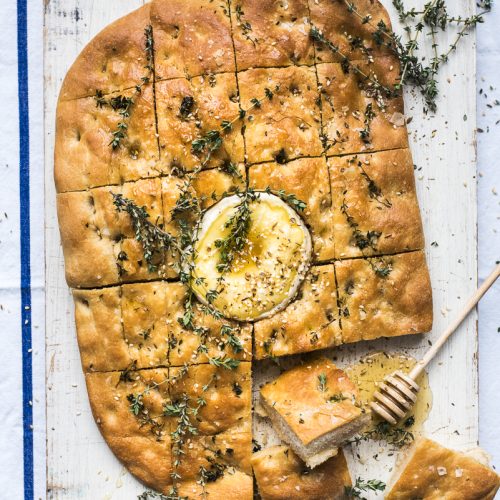
Baked Camembert Focaccia with Honey and Dukkah
Be it cozy festive dinners inside or lazy barbecues around the pool, this Baked Camembert Focaccia with Honey and Dukkah will work with any occasion
Ingredients
- 500 g white bread flour
- 10 g sachet dried yeast
- 10 ml sugar
- 7½ ml salt
- 300 ml lukewarm water
- extra virgin olive oil
- sea salt
- fresh thyme
- 1 wheel camembert cheese
- honey for drizzling
- dukkah for sprinkling
Instructions
- Place the flour, yeast, sugar and salt in a large bowl and make a small well in the middle
- Slowly pour the water into the well while mixing with a fork
- Mix until all the ingredients start coming together, and then knead for about 10 minutes until you have a smooth, soft dough that springs back to the touch
- Lightly oil a large bowl with some olive oil and transfer the dough to the bowl
- Cover with a damp kitchen towel and leave to prove in a warm place for about 30 minutes until doubled in size
- Lightly oil a baking tray, punch down the dough and spread the dough out to cover the tray
- Using your fingers, push down roughly on the dough to make dips and wells
- Drizzle with extra virgin olive oil, sprinkle with some sea salt and fresh thyme
- Leave to prove in a warm place for 20 minutes
- Preheat the oven to 200 degrees C
- Bake the focaccia for 20 minutes until golden on top and cooked through
- Remove from the baking tray and place on a cooling tray to cool down
- Once the focaccia is cool enough to handle, place back on the baking tray and preheat the oven to 170 degrees C
- Carefully slice the focaccia into about 2cm x 2cm bit sized squares making sure not to cut through the bottom crust
- Use the camembert wheel to cut a circle in the middle of the dough for the camembert to fit into
- Remove the bread within the circle but leave a bottom of bread crust for the cheese to stand on
- Turn the camembert on its side and cut the top off and place the wheel in the hole, cut side up
- Drizzle the focaccia with more olive oil, letting the oil drip between the cut segments
- Bake for 25 minutes until the cheese is melted
- If the focaccia is browning too much, cover lightly with foil to keep from browning
- As soon as the focaccia comes out of the oven, drizzle liberally with honey, sprinkle with some dukkah and sea salt and serve immediately